

Outdoor shelter has to balance comfort, appearance, and resistance to changing conditions. Roof material plays an especially important role because it receives direct exposure to rain, sunlight, wind, and seasonal temperature changes. Metal gazebo designs have gained attention for this reason, offering a roof surface that can provide dependable coverage without relying on fabric. SUNJOY also offers structures that combine practical roofing materials with features intended to make outdoor areas more comfortable and usable.
Long-Term Resistance To Outdoor Exposure
Metal roofing is valued partly for its ability to handle repeated weather exposure. Unlike fabric, which may become worn, stained, or weakened after prolonged contact with moisture and sunlight, properly coated or treated metal can provide durable outdoor performance when the material and finish are appropriate for the environment.
Galvanized steel is particularly useful because the zinc coating provides an additional barrier against corrosion. Scratches and surface damage still require attention, but routine inspection can help identify areas that may need maintenance before deterioration spreads.
Roof shape contributes to performance as well. Sloped panels encourage rainwater to move away from the structure rather than remain on a flat surface. This reduces prolonged water contact and can also help limit debris accumulation after storms.
Better Protection From Rain And Sun
A roof serves as the primary barrier between occupants and precipitation. Metal panels provide a solid overhead surface that does not rely on fabric tension, making them suitable for outdoor areas where consistent overhead coverage is needed.
Sun exposure creates another consideration. Strong ultraviolet radiation can gradually affect outdoor furniture, flooring, fabrics, and decorative materials. Solid roofing reduces direct sunlight beneath the shelter, helping create a more comfortable environment while limiting some UV exposure.
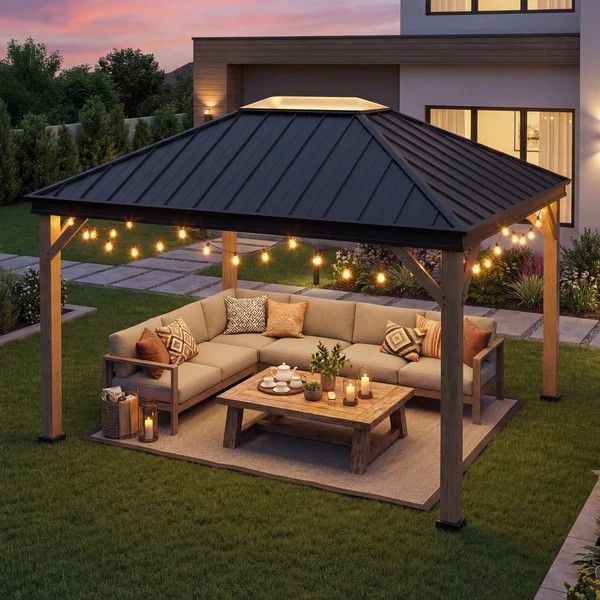
Natural light does not necessarily have to disappear beneath a solid roof. The Cedarville Steel Hardtop Gazebo with Skylight, 11×13, for example, combines a galvanized steel roof with a built-in skylight. Daylight can pass through the skylight, improving visibility during cloudy conditions while the surrounding roof provides rain and UV protection.
Structural Benefits Of Metal Roofing
Roof weight and construction influence how an outdoor shelter responds to environmental loads. Properly designed steel roofing can provide rigidity across the upper structure, where reinforced connections are part of the design, they can help transfer loads through the frame.
Snow is another factor worth considering in colder regions. Accumulated snow can place significant downward pressure on a roof, so local snowfall patterns and the structure’s stated load specifications should always be reviewed before installation.
Wind requires a slightly different approach. Roof panels, frame connections, anchors, and the underlying surface work together as a system. Even strong roofing material cannot compensate for inadequate anchoring or an unstable foundation.
Metal Versus Fabric Roofing
Fabric canopies have practical advantages, particularly when lightweight shade and seasonal flexibility are priorities. Their removable nature may suit climates where shelters are stored during winter or severe storms.
Metal roofing takes a different approach by providing a more durable overhead surface. Metal roofing does not need to be folded or removed seasonally. This makes maintenance more convenient, particularly in areas with unpredictable weather.
The difference becomes especially noticeable during extended outdoor use. A metal top gazebo can provide consistent overhead coverage for dining, seating, or gatherings, while a fabric canopy may require closer inspection for tears, sagging, and weather-related wear. For homeowners who use their outdoor space year-round, the long-term durability of metal often outweighs the initial cost difference, whereas fabric remains a sensible choice for seasonal or occasional use.
Design And Maintenance Considerations
Choosing metal roofing does not mean ignoring maintenance. Leaves, branches, and dirt can collect around roof edges or drainage points, so occasional cleaning remains useful. Fasteners should also be checked periodically, especially following severe weather.
Appearance can influence the decision as much as practical performance. Modern galvanized or coated steel roofs can complement contemporary landscaping while creating a more substantial architectural appearance. Skylights can further change the atmosphere by introducing daylight without opening the entire roof.
Ventilation deserves attention beneath any roofed outdoor structure. Blocking direct sunlight may reduce heat gain, but airflow remains important during warm weather. Furniture placement should leave sufficient circulation space rather than closing off every side of the shelter.
Conclusion
The biggest advantage of metal roofing lies in its combination of durability, weather protection, and structural stability. For households seeking dependable outdoor coverage, metal gazebo construction can offer a useful alternative to fabric-based shelter, particularly in climates with frequent rain or strong seasonal changes. Careful anchoring, sensible maintenance, and suitable roof design remain essential regardless of material.
A well-planned metal top gazebo can also incorporate skylights or other design features that balance protection with daylight, giving outdoor spaces greater flexibility. With thoughtful material selection and proper upkeep, SUNJOY structures can support comfortable outdoor use while reducing some of the maintenance concerns associated with temporary canopy materials.
