

Meeting rooms often serve different purposes throughout the day. One room may host a formal presentation in the morning and a group discussion in the afternoon. Furniture arrangement affects how quickly staff can prepare the space for each activity. Tables with adjustable storage positions can make these changes easier.
The flip top conference table is designed around this need for flexibility. Its tabletop can be raised into a vertical storage position, allowing staff to move or arrange tables with less difficulty. However, the mechanism must also provide stable support when the table is used.
How Does the Flip Top Mechanism Work?
The mechanism connects the tabletop to the supporting frame through a pivoting structure. When released, the tabletop rotates upward from its horizontal working position. This reduces the space required to store the table compared with leaving the surface flat.
Different mechanisms use different release and locking arrangements. Some require operators to activate a lever, while others use a release handle beneath the tabletop. Facility managers should check whether staff can operate the mechanism without excessive force.
Locking performance is equally important. The tabletop must remain securely positioned during meetings. Buyers should examine how the mechanism holds the working surface horizontally and whether accidental release is prevented during normal use.
Why Does Table Reconfiguration Become Easier?
Traditional meeting tables can be difficult to rearrange because their horizontal surfaces occupy considerable space. Moving several tables may require staff to separate furniture, clear surrounding areas, and coordinate lifting.
Flip top designs reduce this difficulty by allowing tabletops to fold upward. Staff can temporarily reduce the tables’ horizontal footprint before moving them into storage or preparing another seating arrangement.
For example, a government meeting room may need a rectangular layout for departmental discussions and separate working groups for training. Folding tables can simplify the transition between these arrangements when suitable movement features are provided.
However, the folding mechanism does not automatically make a table mobile. Buyers should distinguish between tabletop rotation and frame mobility. Wheels, glides, and other floor-contact components affect how furniture moves across different surfaces.
Does the Mechanism Improve Space Utilization?
Storage requirements become important in facilities with limited floor space. Folded tabletops may allow compatible tables to be positioned closer together, reducing the storage footprint between scheduled meetings.
Actual storage efficiency depends on the frame design. Leg position, tabletop thickness, folding angle, and nesting clearance determine how closely several tables can stand together.
Facility planners should measure the available storage area before purchasing furniture. They should also confirm whether folded tables can pass through doorways and move around corners without obstructing circulation routes.
Fixed-Top and Flip Top Tables Serve Different Needs
Not every meeting room requires frequent furniture changes. Some spaces maintain a consistent conference layout for regular discussions, executive meetings, or scheduled presentations. Fixed-top tables can be appropriate when the furniture rarely needs relocation.
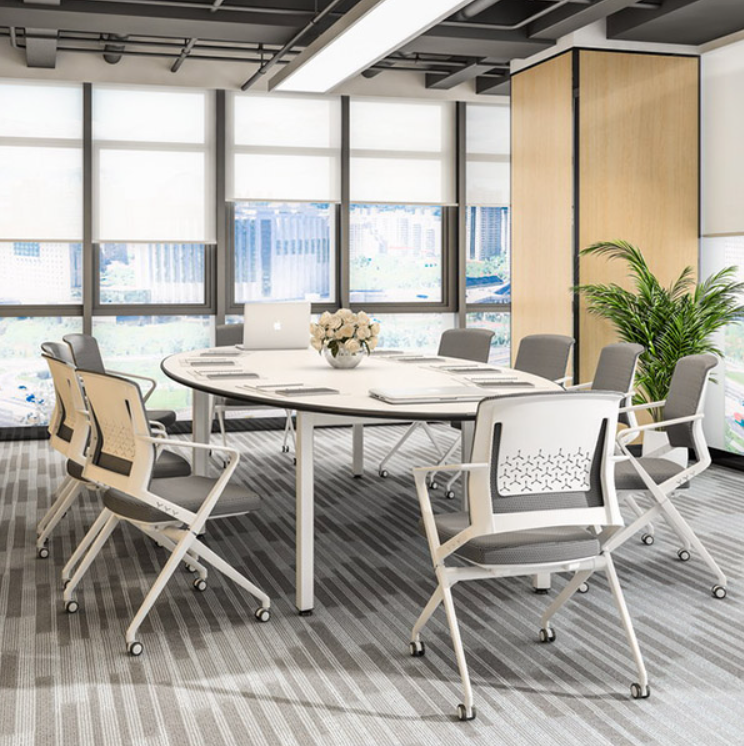
This distinction matters when comparing furniture solutions from Leadcom seating. Their APOLLO Fixed-top Meeting Table provides an example of a fixed-surface design for meeting environments where a stable arrangement is preferred.
The tabletop uses E0-grade particle board with a durable melamine finish. Its column consists of 2mm-thick aluminum with a baking varnish finish, while an aluminum beam provides structural support. PP glides complete the frame configuration.
Metal powder coating is available in standard white, with silver and black as options. The table frame can also be purchased separately without the tabletop, which may be useful for buyers managing specific procurement requirements.
What Should Buyers Examine Before Selecting a Mechanism?
For facilities that frequently reorganize meeting spaces, the flip top conference table should be evaluated through practical operating tests. Procurement teams can ask suppliers to demonstrate repeated folding, locking, unlocking, and repositioning.
During testing, staff should observe whether the tabletop moves smoothly and remains controlled throughout rotation. They should also check potential pinch points around the pivoting components and confirm that operators can access the release controls comfortably.
Room conditions deserve attention as well. Narrow entrances, carpeted floors, storage corners, and existing chairs can restrict movement. Testing furniture against the actual room layout gives buyers clearer information than reviewing dimensions alone.
Maintenance requirements should also be discussed. Moving joints and locking components may require periodic inspection. Procurement documents can specify maintenance instructions, replacement component availability, and procedures for reporting mechanism problems.
How Can Procurement Teams Plan for Future Room Changes?
Furniture decisions should reflect expected room usage rather than a single meeting arrangement. Buyers can review meeting frequency, participant numbers, storage capacity, and the staff available to rearrange furniture.
For larger projects, standardized furniture specifications may simplify purchasing and maintenance across several rooms. However, spaces with different functions may still require separate table configurations.
Suppliers with broader manufacturing capabilities can support coordinated procurement discussions. Leadcom seating combines mold development, metal processing, surface finishing, and other production processes. They also provide a five-year warranty and an eight-service VIP after-sales system.
Before confirming orders, buyers should establish which table configurations suit each room and request written clarification of product specifications, applicable warranty conditions, and delivery arrangements.
Matching Table Design to Meeting Room Requirements
Flip top mechanisms improve flexibility by reducing the effort involved in changing furniture layouts and organizing storage. Their usefulness depends on reliable locking, suitable movement features, and sufficient clearance within the room.
Fixed-top tables remain practical where meeting arrangements rarely change. By assessing actual room activities, movement requirements, and maintenance needs, procurement teams can select furniture that supports daily operations without unnecessary complexity.
