

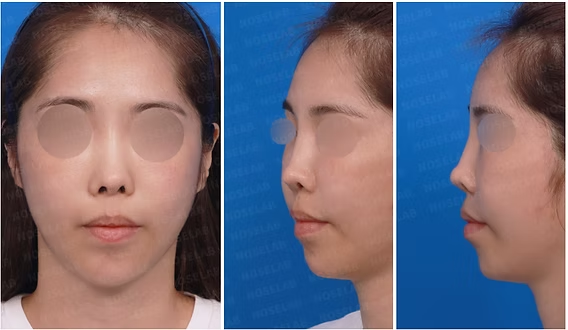
Revision rhinoplasty, also known as secondary rhinoplasty, is a specialized procedure designed to correct issues from a previous nose surgery. Many patients seek revision rhinoplasty Singapore due to unsatisfactory aesthetic results, breathing difficulties, asymmetry, or complications that arose after their initial procedure. Unlike primary rhinoplasty, revision cases often present unique challenges, including scar tissue, weakened cartilage, or altered nasal anatomy, which require specialized expertise and careful surgical planning.
If you are considering improvements to the shape or structure of your nose, it’s important to understand the different surgical options available. Learn more here https://www.allureplasticsurgery.sg/augmentation-rhinoplasty-silicone-vs-cartilage/ about the choices between silicone and cartilage techniques in rhinoplasty Singapore to make an informed decision and explore what might be best for your revision procedure.
Understanding the Challenges of Revision Rhinoplasty
Revision rhinoplasty is generally more complex than a primary nose surgery because the nasal anatomy has already been altered. Scar tissue from the previous procedure, weakened or insufficient cartilage, and changes to the nasal structure can make precise reshaping more difficult. These factors require the surgeon to carefully assess the nose and plan the approach, often customizing techniques for each patient.
Due to these complexities, achieving natural-looking results while maintaining proper function demands experience and a meticulous surgical strategy. Patients considering revision rhinoplasty Singapore should understand that each case is unique, and outcomes rely heavily on detailed planning and surgical expertise.
Common Reasons Patients Seek Revision Rhinoplasty
Patients often consider revision rhinoplasty Singapore for both aesthetic and functional reasons. Common motivations include:
Unsatisfactory cosmetic results – such as a crooked bridge, over-rotated or drooping tip, or overall asymmetry.
Breathing difficulties – including nasal obstruction, collapsed nostrils, or other functional issues caused by prior surgery.
Complications from the previous procedure – such as scarring, over-resection of cartilage, or unwanted contour irregularities.
Desire for further refinement – when patients want to achieve a more natural or balanced appearance.
Addressing these concerns requires a personalized surgical approach, ensuring that both nasal function and appearance are improved safely and effectively.
Evaluating Whether You Are a Candidate
Not everyone who has had a previous nose surgery is automatically suitable for revision rhinoplasty Singapore. Several factors help determine if a patient is a good candidate:
Time since previous surgery – it is generally recommended to wait at least 6 to 12 months to allow the nose to heal fully.
Nasal structure and skin condition – sufficient cartilage, healthy skin, and stable anatomy are essential for achieving reliable results.
Realistic expectations – understanding the limitations and potential outcomes is crucial for patient satisfaction.
Overall health – good general health supports healing and reduces surgical risks.
A thorough consultation with an experienced surgeon is important, often including detailed examination and imaging, to ensure that the procedure is safe, feasible, and tailored to each individual’s needs.
Surgical Techniques and Approaches in Revision Cases
Revision rhinoplasty requires a tailored surgical approach due to the complexities introduced by the previous surgery. Surgeons may use different techniques depending on the patient’s nasal structure and desired outcome:
Open vs. closed approach – the open approach provides better visibility for complex cases, while the closed approach may be suitable for minor adjustments.
Cartilage grafting – cartilage from the septum, ear, or rib may be used to rebuild or reinforce nasal structures weakened by prior surgery.
Tip refinement and bridge reshaping – targeted adjustments help correct asymmetry or refine the nose’s overall shape.
Structural support – reinforcing the nose ensures both long-term stability and improved breathing function.
Because each revision case is unique, the surgeon carefully customizes the technique to address both aesthetic concerns and functional needs, ensuring results that are natural, balanced, and durable.
Recovery and Managing Expectations
Recovery from revision rhinoplasty Singapore is generally longer and more delicate than after a primary procedure due to the complexity of the surgery. Patients can expect:
Swelling and bruising – these are most pronounced during the first 1–2 weeks but gradually subside over several months.
Activity restrictions – avoiding strenuous exercise, heavy lifting, and contact sports is important to protect the healing nose.
Gradual improvement – subtle changes can be seen within a few weeks, but the final results may take up to a year to fully settle.
Follow-up care – regular check-ins with the surgeon ensure proper healing and address any concerns promptly.
Setting realistic expectations is essential. While revision rhinoplasty can significantly improve both appearance and function, patients should understand that achieving perfect symmetry or recreating the exact original structure may not always be possible.
Choosing the Right Surgeon in Singapore
Selecting an experienced surgeon is especially important for revision rhinoplasty Singapore, as these procedures are more complex than primary surgeries. Key considerations when choosing a surgeon include:
Credentials and experience – ensure the surgeon is trained in rhinoplasty and has specific experience with revision cases.
Before-and-after portfolio – reviewing previous revision cases can give insight into their technique and aesthetic results.
Patient reviews and testimonials – feedback from other patients helps gauge satisfaction and the quality of care.
Personal consultation – a thorough consultation allows the surgeon to assess your nose, discuss realistic outcomes, and plan a personalized approach.
Working with a skilled and knowledgeable surgeon increases the likelihood of achieving natural, balanced, and long-lasting results while minimizing the risk of further complications.
Conclusion
Revision rhinoplasty offers a valuable opportunity for patients in Singapore to correct previous nose surgeries and achieve both improved appearance and better nasal function. While these procedures are more complex than primary rhinoplasty, careful planning, the right surgical techniques, and an experienced surgeon can make a significant difference in the results.
If you are considering a secondary procedure to address unsatisfactory outcomes or functional issues, it’s important to explore your options and understand the approach that best suits your needs. Book a consultation at:
Allure Plastic Surgery – Ptosis Surgery | Breast Augmentation | Double Eyelid Surgery
435 Orchard Rd, #22-04 Wisma Atria, Singapore 238877
Phone: +65 6734 9988
